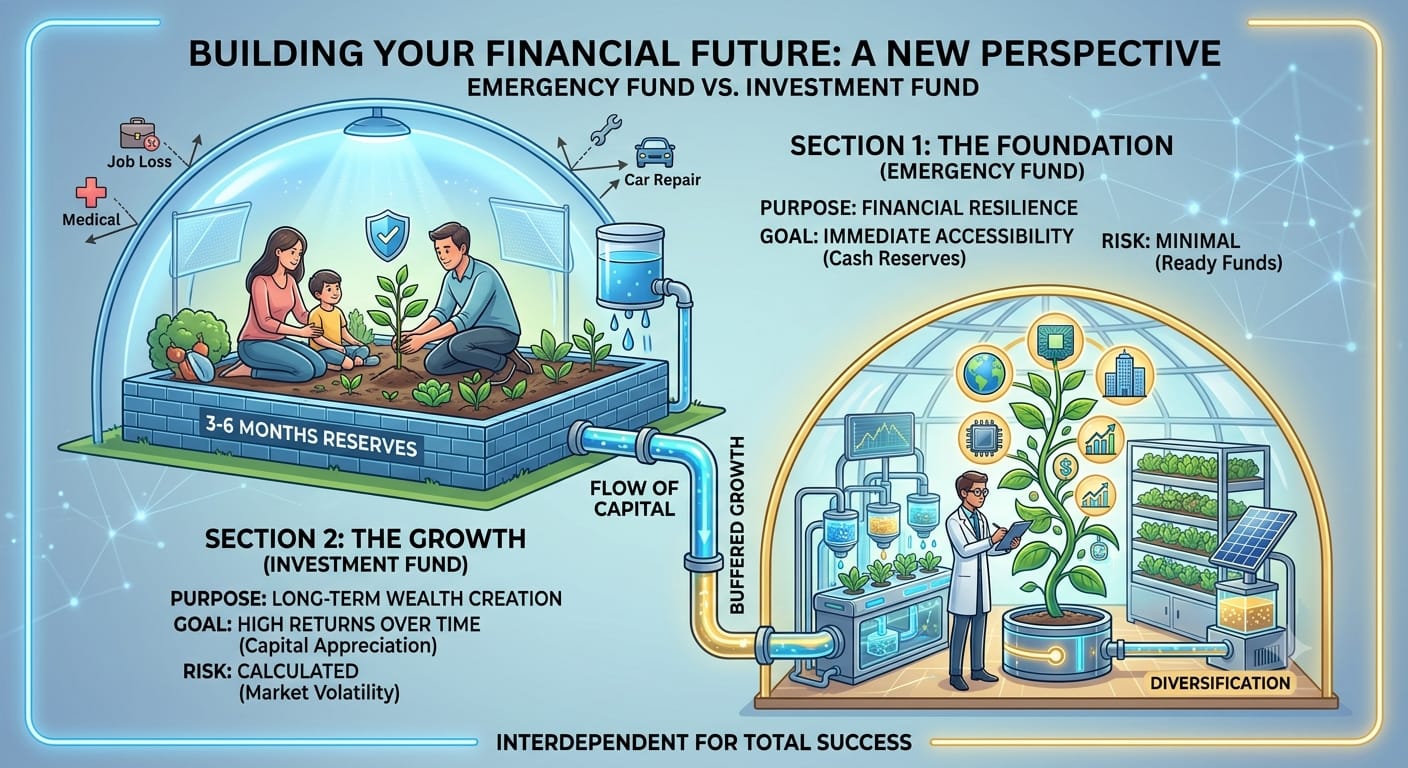
Life is unpredictable. Knowing you have enough money to handle emergencies gives you confidence and peace of mind. Financial security isn’t only about earning more—it’s about being prepared. In the world of finance, understanding the progression from emerging funds to investments is crucial for strategic growth. Many people are eager to begin investing as soon as they start earning. The excitement of watching money grow through stocks, mutual funds, or other investments is understandable.
Two different jobs, two different homes for your money. Emergency Fund vs. Investment- Which Should Come First? You don’t have to choose forever — you just have to choose the right order. Every rupee you earn has two jobs waiting for it: protect you, or grow you. An emergency fund does the first. Investing does the second. The real question isn’t which one is “better” — it’s which one goes first, and how much of each you need before moving on. Get the sequence wrong, and it shows up fast. Invest everything before you have a safety net, and one job loss or medical bill forces you to sell investments at the worst possible time — often at a loss. Build an oversized emergency fund and never invest, and inflation quietly eats your money while it sits idle, earning next to nothing.
What an Emergency Fund Actually Does:
An emergency fund is not an investment. It is insurance you pay for with cash instead of premiums. Its entire purpose is to be boring, liquid, and available the moment you need it — covering job loss, a medical emergency, or an urgent home or vehicle repair without touching credit cards or loans.Because its job is protection, not growth, it belongs in a high-yield savings account or a sweep-in fixed deposit — not in equity, not in mutual funds, and never in anything that can lose value the week you need to withdraw it.
What Investing Actually Does :
Investing is how money grows faster than inflation over time. It works through compounding — small, consistent contributions that build on themselves year after year. The tradeoff is volatility: the same market that grows your wealth over a decade can dip 20% in a bad month.That volatility is exactly why investing money you might need next month is risky, and why cash you won’t touch for 5–10+ years is wasted sitting in a savings account.
An emergency fund protects the wealth you have. Investing builds the wealth you don’t have yet.
So, Which Comes First?
In practice, it’s rarely all-or-nothing. The healthiest approach builds both, but in a deliberate order — starting with a small safety cushion, then splitting effort between the two as your income allows. This isn’t a competition with one winner. An emergency fund and an investment portfolio serve two different purposes at two different timelines, and a sound financial routine needs both. Get the starter cushion in place, start investing early even in small amounts, then build up the full safety net before scaling your investments further. That order protects you from setbacks while still giving your money time to grow.
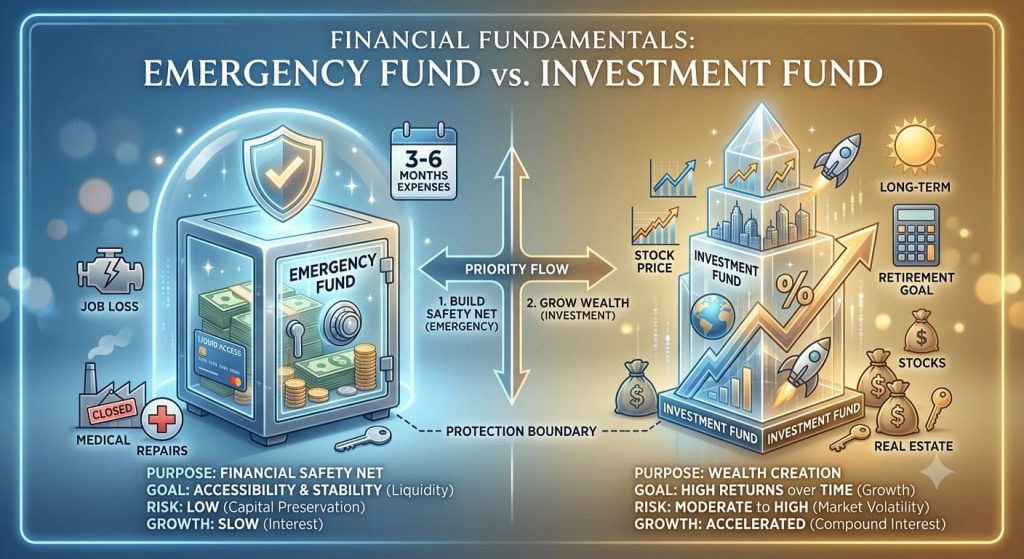
Emergency fund first — before investing. Here’s why:
The answer is simple: Your emergency fund should come first. Think of it as the foundation of a house. Without a strong foundation, even the most beautiful structure is vulnerable. An emergency fund is money kept aside exclusively for unexpected situations
It gives you the psychological stability to stay invested during market downturns instead of panic-selling.
Step 1: Build your emergency fund often 1 month of expenses — fast, even before anything else
Step 2: Pay off any high-interest debt (credit cards, etc.)
Step 3: Start investing regularly through SIPs, index funds, or diversified mutual funds.
Step 4: Increase investments as your income grows while maintaining your emergency reserve.
Build the full emergency fund — typically 3–6 months of essential expenses, kept in something liquid and safe (savings account, liquid mutual fund, FD)
Investments (stocks, mutual funds, etc.) can drop in value right when you need cash most, forcing you to sell at a loss
Without a cash buffer, an unexpected expense (medical bill, job loss, repair) can force you to break an investment early or take on high-interest debt
If your employer offers a matching contribution (like EPF/NPS matching), it’s often worth contributing enough to get the match even while building the emergency fund, since that’s essentially free money.
-Admin, Wealthio.