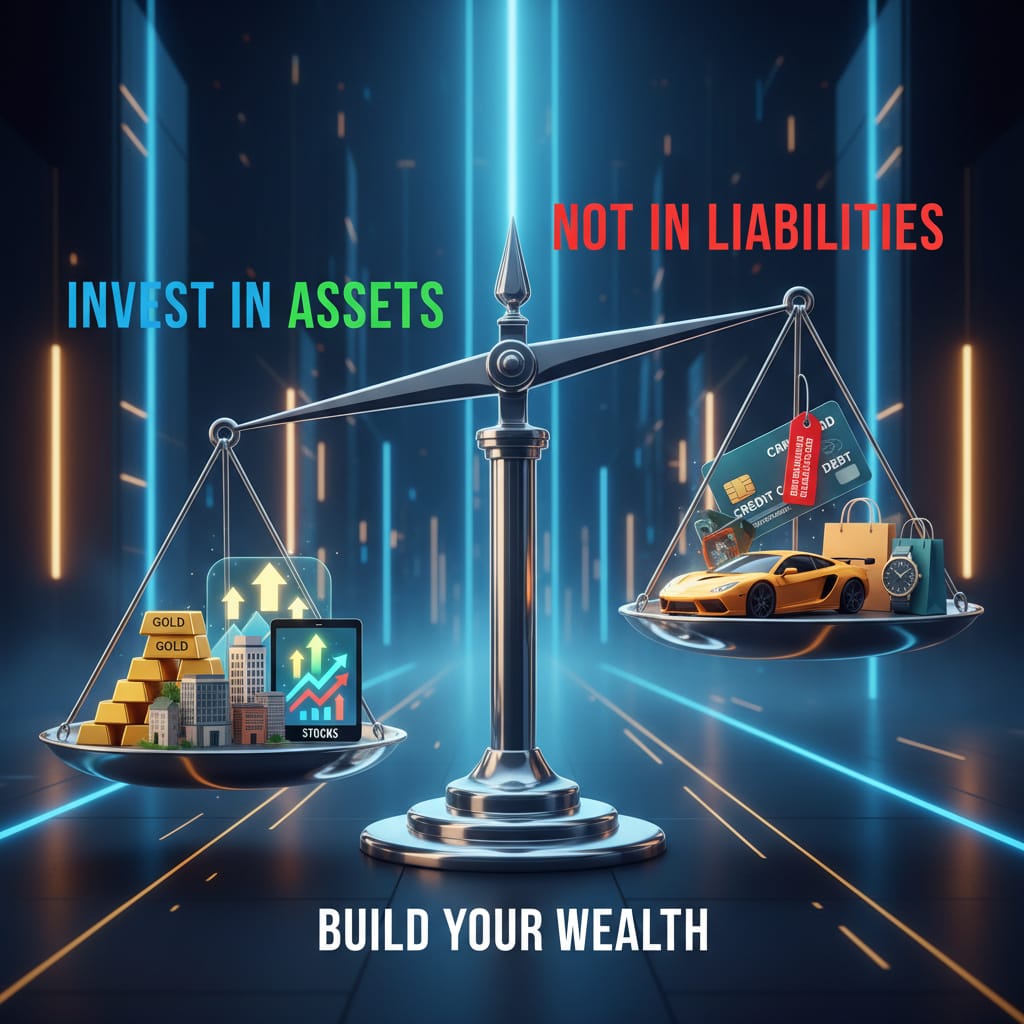
Building wealth is not simply about earning more money. It is about where you put the money you earn. Invest in Assets, Not Liabilities In today’s fast-paced world, the significance of smart financial management cannot be overstated. As individuals strive for financial independence and wealth accumulation, the distinction between assets and liabilities plays a crucial role in shaping their economic fate. Understanding this difference is essential for anyone looking to improve their financial literacy and build a prosperous future.
A Wealth builders think differently: they focus on acquiring assets that have the potential to generate income, appreciate in value, or build long-term financial strength. The ultimate goal is to gradually build a portfolio of productive assets so that your money can potentially generate more money.
Income → Save → Invest → Build Assets → Generate Potential Returns → Reinvest
Over time, this process can create the foundation for financial independence.
A liability is something that creates an ongoing financial obligation or expense like
-High-interest consumer debt
-Expensive loans used for non-essential purchases
-Luxury purchases that require costly financing
– Credit-card balances that are carried from month to month
Not every liability is necessarily bad. A loan used carefully to acquire an income-producing asset may serve a useful purpose. The important question is:
“Is this purchase helping build my financial future, or is it increasing my financial burden?”
The Wealth-Building Mindset
Wealth is often built through repeated financial choices rather than one dramatic investment. Before You Buy, Ask Three Questions:
1. Will this put money into my pocket or take money out?
2. Will it increase in value or generally lose value over time?
3. Could this money be used to build an asset instead?
These simple questions can help shift your thinking from consumption to wealth creation. You don’t have to stop enjoying life or avoid every purchase that does not generate income. The lesson is about priority.

Enjoy your money—but first give your money a job. Buy fewer things that only consume money, and gradually acquire more assets that can create value. “Don’t work only for money. Build assets so your money can work alongside you.” Investments can rise or fall in value. Asset allocation should match your goals, time horizon, risk tolerance, and financial situation.
Recognizing the difference is vital. Investing in assets is a strategy that promotes wealth creation, while investing in liabilities can lead to financial instability. For instance, purchasing a home can be seen as investing in an asset, provided that the property’s value appreciates over time and it potentially generates rental income. Conversely, a luxury car, while appealing, is often viewed as a liability. Its value depreciates the moment it leaves the dealership and it incurs ongoing costs such as insurance, maintenance, and fuel.
Moreover, building a portfolio centered around assets can create multiple streams of income. Diversifying your investments by spreading them across different assets—such as stocks, real estate, and mutual funds—can mitigate risk and provide stability in fluctuating markets. This approach can insulate you from economic downturns and ensure a consistent flow of income.
Financial literacy plays a crucial role in successful investing. It’s important to educate yourself about how different investments work and how they align with your long-term goals. Many individuals may inadvertently fall into the trap of accumulating liabilities while neglecting the importance of acquiring assets. As you cultivate a mindset geared towards asset accumulation, you’ll find that achieving lasting wealth and financial freedom becomes an attainable reality.

– Admin, Wealthio