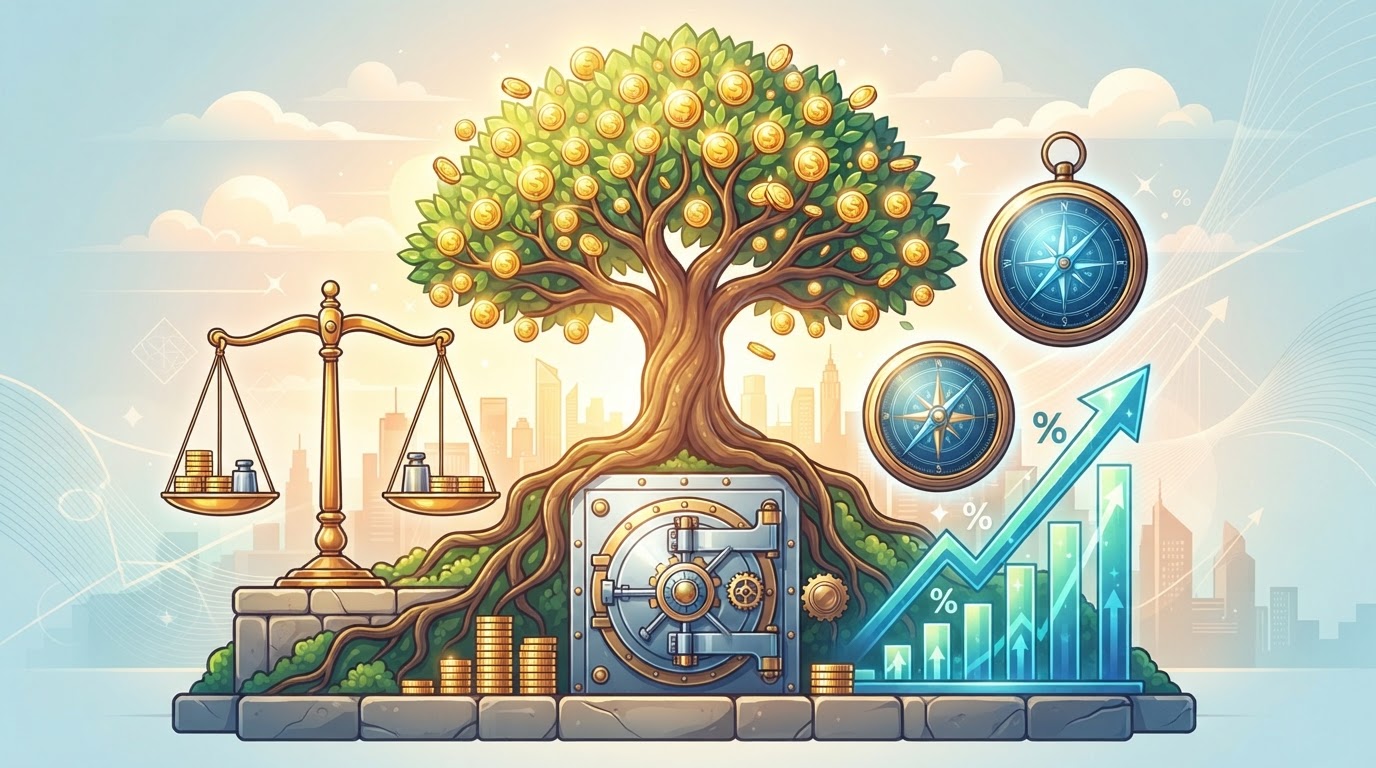
Learn how to move beyond a single salary, build multiple sources of income, and create a stronger financial future. Most of us grow up learning one way to earn money: get a job, work hard, and collect a paycheck at the end of the month. It is a solid start, but it has one big weakness: the moment you stop working, the income stops too. Wealthy people think differently. They build several streams of income, so that their money keeps flowing from more than one direction. In this article, we break down the seven income streams that wealthy people commonly build, explain how each one works in simple language, and show you how to take your first step, even if you are starting small.
Why One Income Stream Is Risky?
Relying on a single source of income is like standing on a one-legged stool. A job loss, a health problem, a business slowdown or an economic downturn can shake your entire financial life. Multiple income streams give you:
* Security: if one stream dries up, others keep you afloat.
* Faster wealth building: more income means more money to save and invest.
* Freedom: you gain the choice to work less, switch careers or retire earlier.
The saying is simple: most people stop at one stream. Aim for at least three.
- Earned Income: The Foundation of Financial Growth
Earned income is the money you receive in exchange for your time and skills: a salary, wages, fees or commissions. For almost everyone, this is the foundation. It pays the bills and gives you the money to start building the other streams.
– Develop skills that improve your career opportunities.
– Negotiate your salary when your experience and performance justify it.
– Explore suitable freelance or consulting opportunities.
– Set aside a regular portion of your income for savings and investments.
The objective is not simply to earn more but to use your earnings wisely. A higher salary creates an opportunity to build wealth when spending and saving are managed thoughtfully. The key is to treat your job as the engine that funds your future, not the final destination.

2. Profit- Business Earning Through Value Creation
Business profit is what remains after you subtract expenses from your revenue. Unlike a salary, business income has no fixed ceiling. A well-run business can grow, hire people and earn even when you are not personally present for every task. Starting a business also involves risks, including financial losses, competition, and uncertain demand.
How to approach business income wisely:
– Start with a clear understanding of customer needs.
– Test your idea before making a large investment.
– Maintain separate personal and business accounts.
– Track cash flow, costs, taxes, and profitability.
– Reinvest a reasonable portion of profits when the business has genuine growth opportunities. You do not necessarily need to establish a large company. A small, well-managed business or a legitimate side venture may become an additional source of income over time,
3. Interest: Letting Your Savings Earn
Interest is the reward you earn for lending your money, whether to a bank, through fixed deposits, savings accounts, bonds or similar instruments. It is one of the simplest and most predictable streams, and a great first step for beginners.
How to use it:
– Maintain an emergency fund in an accessible form.
– Compare interest rates, terms, and premature withdrawal rules.
– Understand deposit insurance limits and the risks associated with different institutions and products.
– Consider the effect of inflation and taxes on your actual return.
Interest rarely makes anyone rich alone, but it teaches the habit of making money work for you. Interest income may appear modest initially, but regular contributions and reinvestment can help savings grow over time.

4. Rental Income: Assets Paying You
Rental income comes from letting others use something you own: a house, a shop, an office space, land, or even equipment and vehicles. Property can provide steady monthly cash flow, and in many cases the asset may also grow in value over the years.
Before investing in rental property, consider:
– The expected annual rent compared with the total purchase cost.
– Location, tenant demand, and vacancy risk.
– Maintenance expenses and other recurring costs.
– Loan repayments and the effect of borrowing.
– Whether your money would be better diversified across other investments.
Rental income can be valuable when the numbers make sense. A property that looks impressive may still be a poor investment if its net income is low or its costs are excessive. Remember: evaluate the return, not just the asset’s appearance or price.
5. Capital Gains: Building Wealth Through Appreciation
Capital gains are the profits you make when you sell an asset, such as shares, mutual fund units, property or gold, for more than you paid. This is how long-term investing builds wealth: you buy good assets, hold them patiently and let time do the heavy lifting.
Smart habits for beginners:
* Invest according to your goals and time horizon.
– Understand what you are buying and why.
– Diversify instead of depending entirely on one investment.
– Avoid making decisions based only on recent price increases.
– Understand the applicable tax rules before selling.
Long-term investing should be based on research, risk tolerance, and discipline rather than the expectation of quick profits.

6. Dividends: Receiving a Share of Company Profits
Dividends are a share of a company’s profits paid out to its shareholders. When you own shares of a company that distributes dividends, you receive a payout, often every quarter or year, simply for being an owner.
How to approach dividends:
– Examine the company’s financial health.
– Review its history of earnings and dividend payments.
– Understand whether the dividend is sustainable.
– Consider debt, cash flow, business prospects, and valuation.
– Account for diversification and the risk of share-price losses.
Over time, a growing dividend portfolio can become a reliable second pay cheque.
7. Royalties: Earning From Intellectual Property
Royalties are payments you receive each time something you created is used or sold. This includes books, music, courses, photographs, software, patents and designs. You do the work once, and the income can continue for years.
Authors earning royalties from books.
Musicians receiving payments for licensed music.
Creators licensing photographs, illustrations, or educational materials.
Inventors receiving payments for the licensed use of patented technology.
Royalties take effort and patience up front, and not every creation becomes a hit, but the upside is the closest thing to truly earning while you sleep.
The idea of having seven income streams may sound attractive, but trying to establish all of them at once can lead to poor decisions and unnecessary financial pressure .
Wealth is rarely built by a single pay cheque. It is built by layering income sources, one at a time, with patience and discipline. Wealth is not built overnight, nor does it require becoming a millionaire in a few years. Sustainable wealth often comes from consistent saving, sensible investing, careful risk management, and the patience to let money grow. The goal is not merely to earn more money, but to build a financial life that gives you greater choice, stability, and freedom.
-Admin, Wealthio