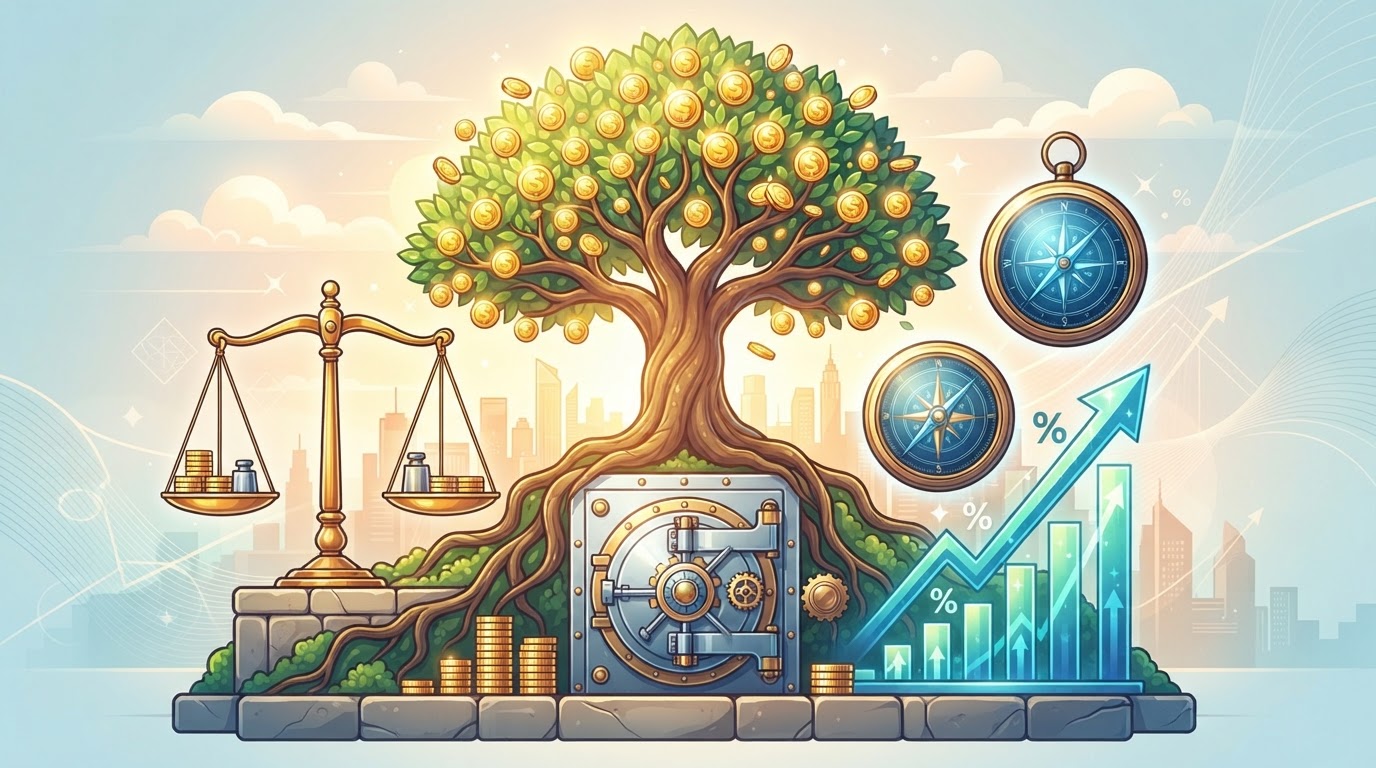
We often assume that wealthy people became wealthy because they earn enormous salaries. A high-paying job. A successful business. A big investment. A lucky opportunity. If it did, everyone with a six-figure income would eventually become financially independent. The reality is very different. Some people earn a lot and remain financially stressed. Others earn a modest income but steadily build savings, investments, assets, and financial freedom. The difference is often not how much money they make—it is what they do with the money they make. Your mindset determines what happens to that money after it arrives. Don’t work only to earn money. Work to develop the mindset, skills, habits and assets that allow money to work for you.
Income Is the Raw Material, Not the Blueprint: Income matters — nobody builds wealth from nothing. But income is only the raw material. What you do with it is what determines the outcome. Give two people the same salary, and one will end the year with a growing investment account while the other ends it with the same debt they started with, or worse.
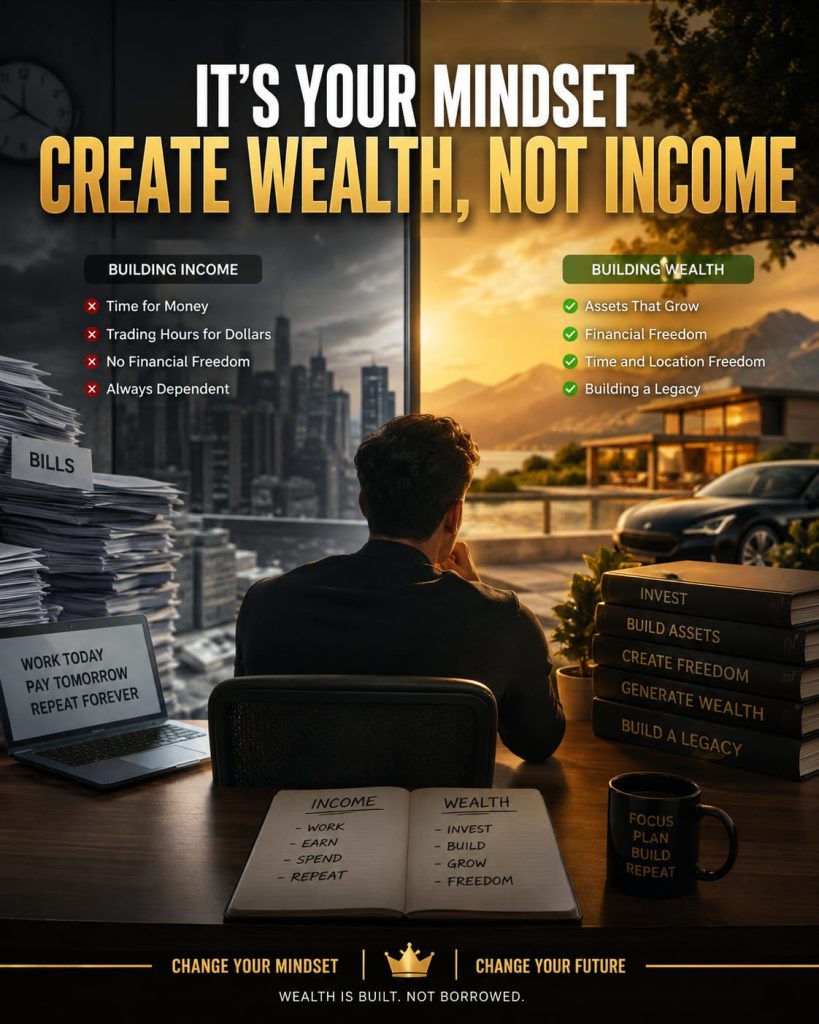
The Lifestyle Trap: One of the most common wealth-killers isn’t a low income — it’s lifestyle inflation. As earnings rise, so does spending: a bigger apartment, a nicer car, more frequent takeout. Each upgrade feels justified in the moment, but together they quietly consume the very raise that was supposed to build financial security.
The Compounding Effect of Small Decisions: Wealth rarely arrives in a single dramatic windfall. It accumulates through small, repeated decisions: automatically investing a portion of every paycheck, resisting an impulse purchase, choosing to negotiate rather than accept the first offer. None of these decisions feels significant on its own. But mindset determines whether they happen consistently — and consistency, compounded over years, is what actually produces wealth.
Scarcity Thinking vs. Growth Thinking : A scarcity mindset treats money as a fixed, finite resource to be protected or hoarded, and often leads to fear-based decisions or a refusal to invest at all. A growth mindset treats money as something that can be grown deliberately — through skills, investments, and calculated risk. Neither mindset is about recklessness or carelessness; it’s about whether opportunity is met with avoidance or with informed action.
Income Creates the Opportunity , Mindset Decides the Outcome: The honest version of this idea isn’t that income doesn’t matter. It’s that income creates the opportunity, and mindset determines whether that opportunity turns into lasting wealth. Someone earning a modest salary with disciplined saving and investing habits will often outpace a high earner who spends reflexively and saves inconsistently. Over a long enough timeline, mindset — not income — is the variable that decides who ends up wealthy.
Wealthy People Think Long-Term: One of the biggest differences between a wealth-building mindset and a consumption mindset is the ability to delay gratification. The wealthy mindset asks: “What will this decision do for me five or ten years from now?” The short-term mindset asks: “What can this money buy me today?”
One of the most expensive mistakes people make is confusing looking wealthy with being wealthy. A luxury car, Designer clothes & An expensive holiday make someone look successful. But appearances don’t tell you what is happening behind the scenes.
Your Biggest Asset May Be Your Skills : A wealth mindset doesn’t only focus on saving money. It focuses on increasing earning power. If you can become better at something valuable, your potential income can increase. Skills such as: communication, sales, technology, leadership, financial literacy, marketing, problem-solving, entrepreneurship, artificial intelligence, Data analysis
This creates a powerful cycle: Learn → Become valuable → Earn more → Save more → Invest more → Build assets.
The Takeaway : A bigger income can accelerate wealth-building, but it cannot replace the mindset required to build it. Let raises fund your future instead of your lifestyle. Your income may determine where you start.
Your mindset, habits and decisions can determine where you go.
-Admin, Wealthio